
Affinity Tags
An affinity tag (epitope tag) is a short polypeptide or protein designed to be genetically engineered to a target protein. Even in the absence of antibodies against the target protein, the protein can be detected or purified using tag-specific antibody. In general, an affinity tag is added to the N-terminal, C-terminal, or inside of the target protein.
Applications
Affinity tags can be utilised for a wide variety of applications, in the absence of a specific commercially available antibody, for your protein of interest, for instance, if it is a novel protein. This includes techniques such as Western blot, immunocytochemical staining, immunoprecipitation, ELISA, immunofluorescence and immunoelectron microscopy.
Benefits
Can detect or purify the target protein even in the absence of antibodies against the target protein
Can distinguish the target protein from endogenous proteins
Does not cross-react with proteins similar to the target protein
Can improve protein solubility (depending on the type of affinity tag)
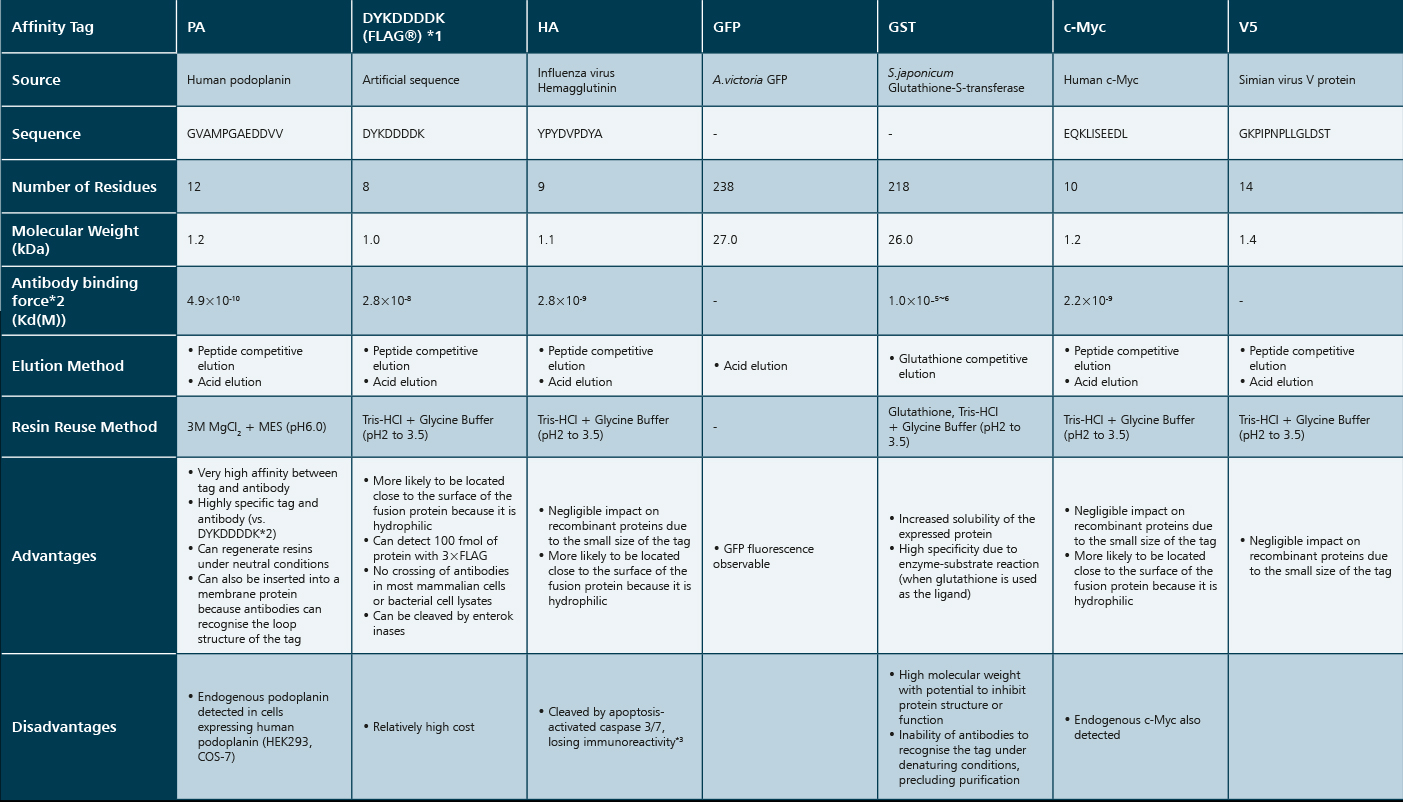
Comparison Chart
Product Selection
Literature
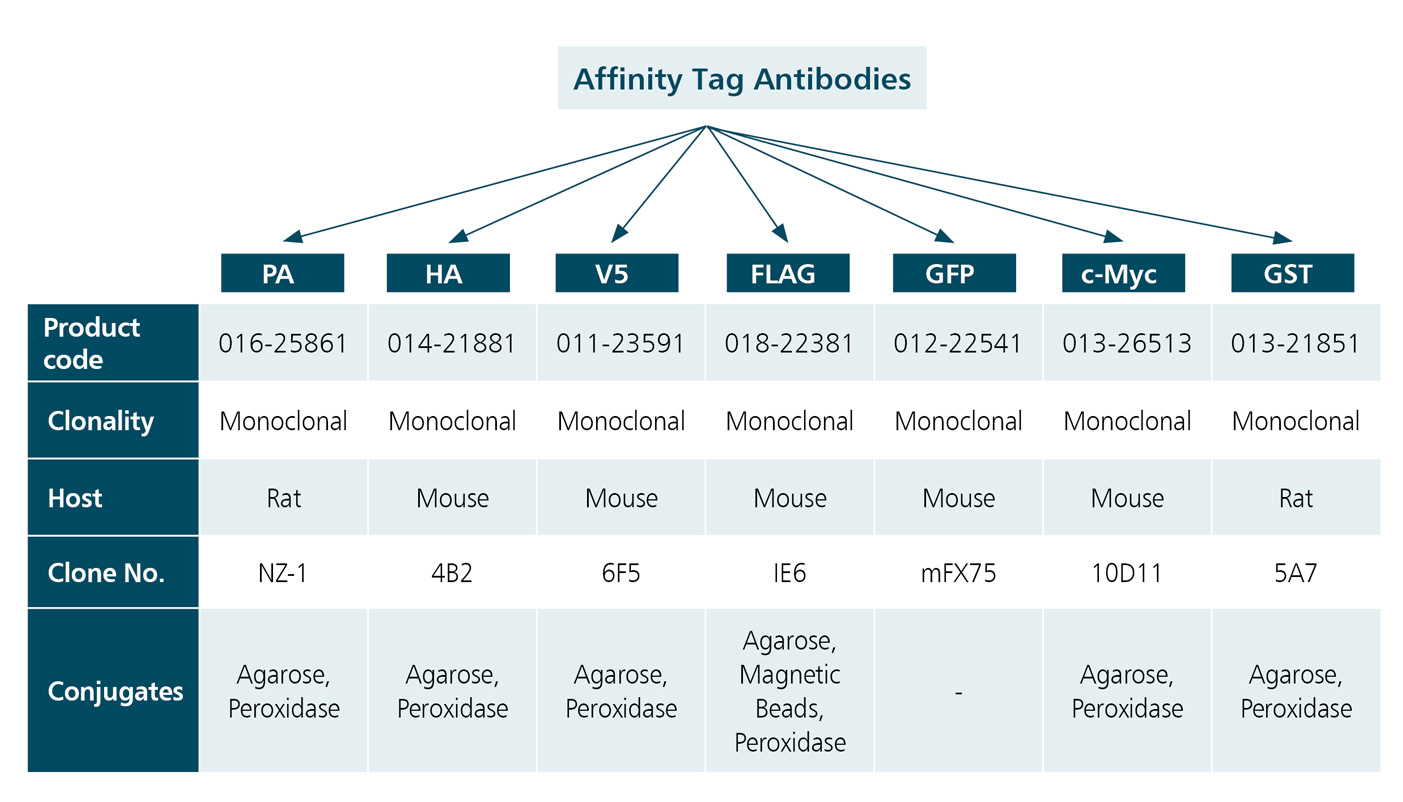
The PA tag is an affinity tag system of Japanese origin involving a peptide tag (GVAMPGAEDDVV) derived from PLAG sequence in human podoplanin. The anti-PA tag antibody (NZ-1) has been referenced in a multitude of scientific literature, demonstrating its high affinity and specificity to the PA tag, enabling one-step high purification of PA-tagged proteins.
-

1. Yuki Fujii et al., PA tag: A versatile protein tagging system using a super high affinity antibody against a dodecapeptide derived from human podoplanin (Protein Expression and Purification, 2014) 95
-
2. Ayaka Sato et al., OX40 Ligand-Mannose-Binding Lectin Fusion Protein Induces Potent OX40 Cosignaling in CD4+ T Cells (Biological and Pharmaceutical Bulletin, 2022) 45
-
3. Risako Tamura et al., Application of the NZ-1 Fab as a crystallisation chaperone for PA tag-inserted target proteins (Protein Science, 2019) 28
