Extracellular Matrix Products
Using extracellular matrices (ECM) and proteins in culture can provide cells with a more physiologically relevant environment giving more realistic morphology and intercellular interactions.
Cells in-vivo exist in a 3D environment surrounded by other cells, membranes and proteins but culturing in vitro on flat plastic surfaces can give rise to artificial 2D layers.
Extracellular matrices (ECM) create a more accurate representation of the natural environment and have benefits for a wide range of cell cultures.
The most common component of the extracellular matrix is collagen, which facilitates cell attachment, differentiation, migration and tissue morphogenesis.
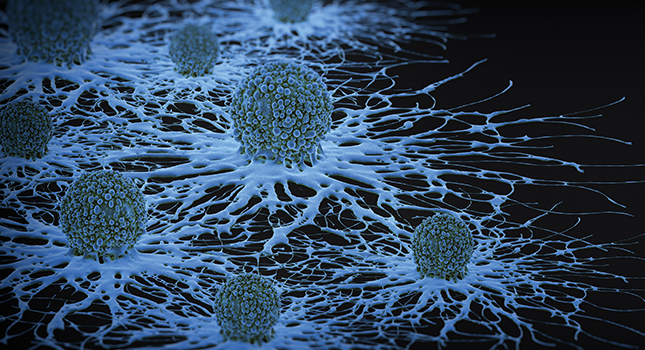
Cellmatrix® collagen solutions are specifically designed for a variety of tissue culture techniques from coating culture surfaces to creating collagen gel interfaces or embedded cultures. Collagen Type I (acid soluble or pepsin-solubilised) is available in a convenient liquid format and has been successfully used with a number of cultures including alveolar and proximal tubule epithelial cells.
Cellmatrix® Product Selection Guide

Benefits
Extracellular matrices perform essential structural and biochemical functions mimicking the in-vivo environment, making them an irreplaceable asset for your cell culture.
Enhanced Cell Attachment
Extracellular matrices such as laminin are widely known to improve attachment of cells such as neurons and muscle cells when used to coat the surface of culture vessels.
Ideal for Microscopy
Cellmatrix Series Collagen I-A forms highly transparent gels with premium optical clarity, ensuring accurate observation of samples with microscopy.
Effective for 3D Cell Culture
Cellmatrix Series Collagen forms a scaffold that is invaluable for embedded 3D cell culture methods, including proliferation of induced pluripotent stem cells (iPS cells) for regenerative medicine.
Beginner Friendly
The Collagen Gel Culturing kit contains all the necessary reagents for preparing collagen-gel cultures and is recommended for beginners.
Synthetic Alternatives
Poly-L-Lysine promotes cell adhesion and is synthetic, minimising infection risk and lot-to-lot variability.